8 times Apple hardware failed
Apple’s history is replete with hyper-successful hardware ventures. From the Apple II to the M-series processors, the company has amassed a trove of triumphant products. However, there is also a small, exclusive group of Apple hardware products that bombed. Let’s check them out.
1
Apple III

Coming in the wake of the success of the Apple II, Apple’s first proper triumph in the hardware space, the Apple III was the company’s first computer that wasn’t designed solely by Steve Wozniak. Despite a huge marketing budget and its predecessor’s popularity, Apple III was a massive failure.
Steve Jobs’s insistence on silent operation made the computer run as hot as an oven. Coupled with the shoddy build quality of the logic board, the hellish combo resulted in all kinds of hardware issues, from chips falling out of their sockets to numerous short circuits to floppy disks melting inside it.
Apple tried to fix things by introducing the Apple III Plus in 1984, but it too ended in failure. The only silver lining in its legacy is its Apple SOS (pronounced “Apple sauce”) operating system, which Wozniak cherished.
The original model was discontinued in 1984, with the III Plus selling only for about a year before it, too, was discontinued in September 1985. Apple III was Apple’s first failure, with the second coming right after it.

10 Times Software Companies Tried to Make Hardware and Failed (and Vice Versa)
It turns out that hardware and software don’t always mix
2
Lisa

The Apple Lisa is one of Apple’s most important hardware products ever. It was the first Apple computer featuring a graphical user interface (GUI), and Apple had high hopes for it. Despite being a personal computer, Apple didn’t target individual users; it marketed the Lisa to businesses instead. The reason was its eye-watering price.
Due to the advanced hardware of the time, such as a large, high-definition display, whopping 2MB of RAM, and a massive 5MB hard drive, the LISA cost almost $10,000 when it launched in 1983. That’s more than $33,000 in 2025 money!
Due to its astronomical price and the imminent release of the first Macintosh, which launched in early 1984 and had a much more palatable price, Apple managed to sell only about 10,000 units, with the company discontinuing the Lisa lineup in 1986.
3
Macintosh Portable

The hype preceding the Macintosh Portable release was massive. Everyone wanted to try the first portable Mac, but the excitement died shortly after the launch. The main issue was the size.
Compared to portable computers of the late 1980s, the Macintosh Portable was huge and expensive—it sold for $7,300, nearly $19,000 in today’s money.
Couple that with the fact that you couldn’t boot it up without its battery pack being almost fully charged and that its LCD was nigh unreadable in low light, and the Macintosh Portable ended up being a massive disappointment sales-wise. Apple pulled it from the market in 1991, just two years after launch.
4
Newton
The Apple Newton lineup of handhelds was revolutionary in more than one way. It was one of the first PDAs (Personal Digital Assistants), and the first to be called by that name. It was also one of the first devices powered by an ARM CPU, and its handwriting recognition tech was impressive, at least on paper.
But the jig was up after the launch. The lauded handwriting recognition feature was anything but accurate; the software was buggy, the device was overtly expensive, and it simply couldn’t compete with other PDAs, which were both cheaper and more versatile.
The entire Newton lineup was axed quickly after Steve Jobs returned to Apple, but Newton’s legacy lives on. It set the stage for the modern touch-screen smartphones and tablet computers.
Thanks to Newton, Apple acquired a stake in Acorn, which later changed its name to ARM Holdings. Apple would later sell its stake in ARM for about $800 million, which, along with Microsoft’s $150 million investment, served as a lifeline that saved Apple from bankruptcy.
5
Macintosh TV

Before the Apple TV, Apple attempted to break into the TV market with the Macintosh TV, which was essentially a Mac with TV capabilities.
In other words, you could switch from the Classic Mac OS desktop to a TV interface with the push of a button. Yep, you couldn’t play TV on the desktop; you had to switch to the TV mode. The machine included a coaxial RF connector for the antenna, as well as a composite video and stereo audio input.
Design-wise, it was a Performa 520 (a member of the Macintosh LC 500 family), but in black. The experiment wasn’t deemed a success because Apple moved only about 10,000 units. The device was on the market for less than two years, and its legacy includes being the only desktop Macintosh with a black finish and the first Mac with TV capabilities.

7 Tech Products That Tried and Failed Spectacularly
These 7 tech flops show how even big ideas can miss the mark.
6
Pippin

Apple had big plans for the Pippin. It was imagined as a multimedia entertainment platform developed by Apple, but licensed to third parties that could slightly modify the reference design and sell it under their own name. It was based on the Classic Mac OS and powered by an early PowerPC CPU design.
The idea had merit, but when it came time to execute it, problems began to surface. Only two companies, Bandai and Katz Media, licensed the platform, but only Bandai ended up selling the console. The device had an identity crisis from the start because it was marketed as a computer, but it was more or less a gaming console.
The sales were far from impressive due to the lack of software and the high price. The development of the Pippin software platform ceased in 1997, shortly after Steve Jobs returned to Apple. The Bandai Pippin was short-lived, with the device sold for only two years, from 1996 to 1998.
7
Power Mac G4 Cube

The Power Mac G4 Cube was a cracking (pun intended) desktop Mac that pushed the limits of industrial computer design. It’s an important product for Apple because it paved the way for miniature, flat-screen iMacs and, ultimately, for the Mac Mini. It also showed that you can build a powerful personal computer that’s a win from both the hardware and design perspectives.
Its arresting design revolved around a see-through cube made of plastic with the case housing the components resting inside it, along with a touch-based power button. There were no fans or expansion slots; the Mac G4 Cube didn’t even include a headphone jack.
Aside from not being upgradable, the machine was also quite expensive; the plastic case would develop cracks, and it only included USB and FireWire ports, which weren’t very popular at the dawn of the 21st century. The Power Mac G4 Cube was sold for less than a year before Apple pulled it from the market in mid-2001.
8
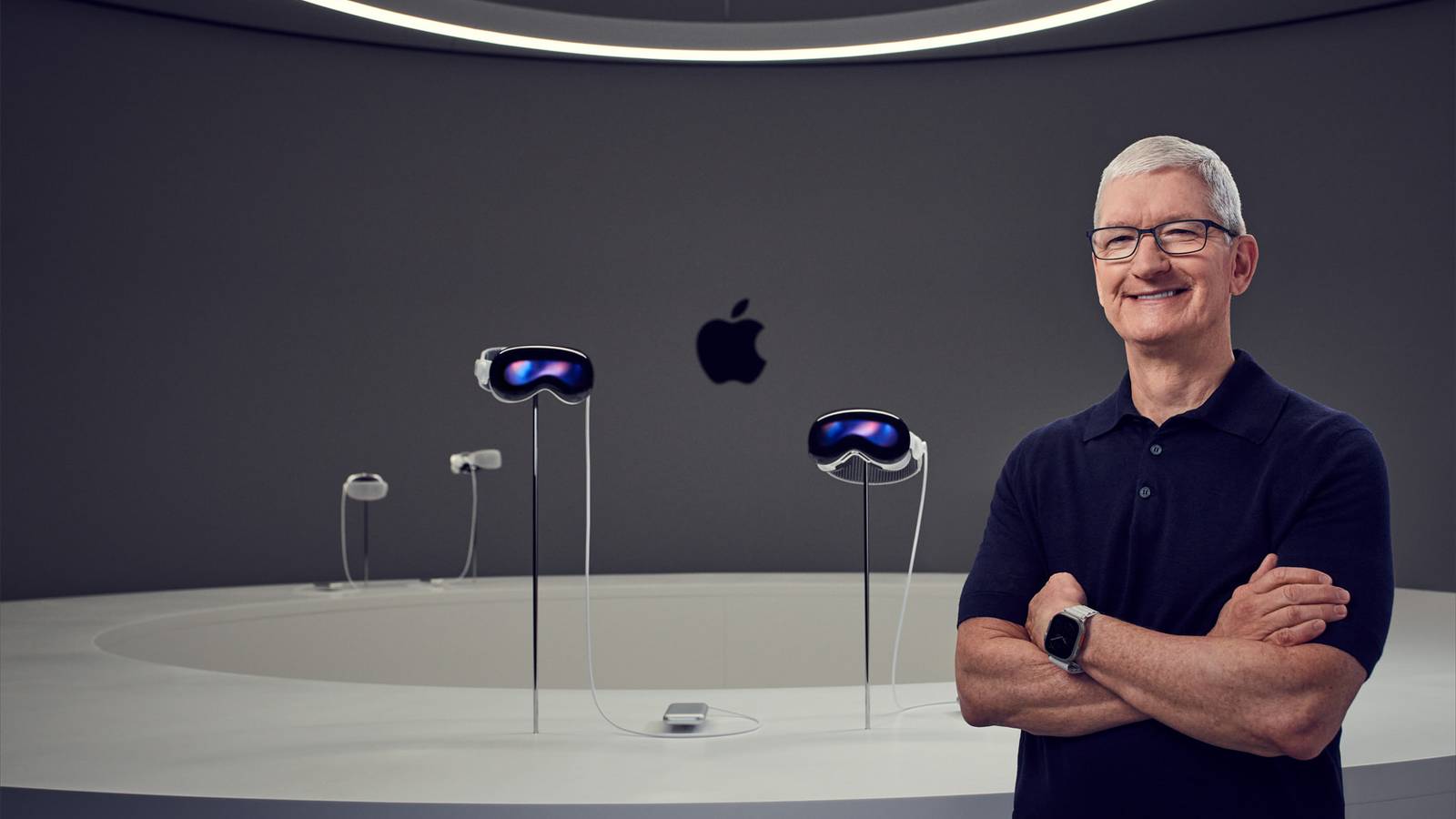
Vision Pro

Now, while the Vision Pro is still around, you could argue that it’s a failure based on sales numbers estimated at around 500,000 units and Apple’s decision to stop producing the original model in late 2024. Yes, the Vision Pro was recently upgraded to the M5 chip, but it remains Apple’s least popular actively sold hardware product by a wide margin.
While undoubtedly important for the company—and mixed-reality tech in general—the Vision Pro, like many other Apple products on this list, suffers from a lack of identity, is too expensive, and simply does not have a large enough audience interested in buying it. As it stands, the Vision Pro is on the way to becoming another rare but spectacular flop for Apple.
Apple is usually successful with its hardware products, with only a handful of notable failures and some less-than-stellar design choices. By contrast, Microsoft’s history is rife with hardware flops.

Google’s Most Notable Failures: Where Did Things Go Wrong?
Google’s pivotal missteps!
link